
2. Why Gelatin Forms Inside the Can
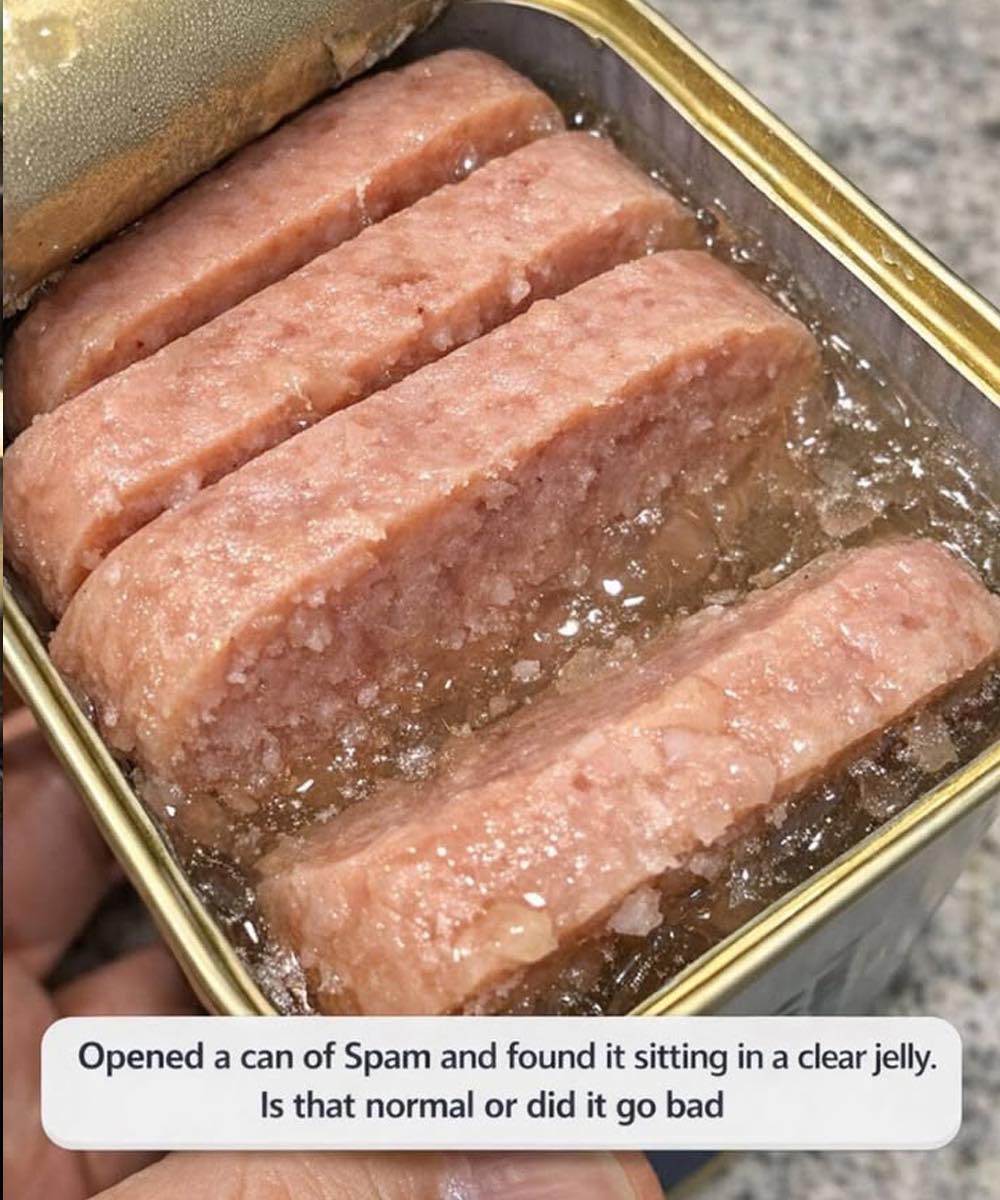
Spam is produced to be shelf-stable. During cooking, heat causes collagen proteins in the meat to convert into gelatin. Once sealed and cooled, the gelatin firms up naturally.
This process not only keeps the meat juicy but also provides an additional protective barrier against bacteria and environmental exposure, allowing Spam to remain safe for extended periods without refrigeration.
3. Telling Normal Gelatin Apart From Spoilage
While gelatin itself is normal, certain changes can signal spoilage. If the jelly smells unpleasant, becomes unusually thick, or changes color, caution is advised. Normal jelly should appear clear or slightly amber and have little to no odor.
Cloudiness, greenish tones, or foul smells are warning signs. Bulging or leaking cans are also red flags, as they may indicate bacterial activity. In these cases, the contents should not be eaten.
4. Visual Signs to Examine
When inspecting Spam, observe both the jelly and the meat. Healthy gelatin should look smooth and translucent, not slimy or discolored. Any green, black, or dark brown coloration suggests spoilage.
The meat itself should be evenly pink. Gray patches, brown spots, or uneven coloring may mean the product has gone bad and should be discarded.
5. Using Smell as a Safety Check
Smell is one of the easiest ways to assess freshness. Fresh Spam should have a mild, slightly salty aroma typical of cooked pork. Sour, rotten, or strong unpleasant odors indicate spoilage.
Since bacterial growth often produces foul smells early on, an off odor is a clear signal to throw the product away.
6. Expiration Dates, Storage, and Can Condition
Always review the expiration date before opening Spam. Although canned foods often remain edible past this date, it marks the period of best quality. Store cans in a cool, dry place, as heat and moisture can shorten shelf life.
Also check for dents, rust, swelling, or leaks. Damage to the can may compromise its seal, increasing the risk of contamination. If the can is damaged, do not consume its contents.
7. Is the Jelly Safe to Eat?
Yes, the jelly is safe and edible. It contributes moisture and flavor to the meat. However, if the texture isn’t appealing, it can be removed before cooking.
When heated, the gelatin melts and blends into the dish. If you prefer to remove it, rinsing the Spam briefly under warm water or wiping it off with a paper towel is sufficient.
8. Preparing Spam With or Without Jelly
To remove the jelly, simply rinse the Spam under warm water for a few seconds. This is especially useful if you plan to cook it further.
Spam works well in many cooking methods—frying, grilling, baking, or sautéing. During cooking, the jelly dissolves naturally and can even help create a crisp, caramelized exterior when fried.
9. Storing Leftovers Safely
After opening a can, any unused Spam should be placed in an airtight container and refrigerated. It’s best eaten within 3–5 days. If you notice unusual odors or texture changes during storage, discard it.
For longer storage, Spam can be frozen. Slice or portion it, wrap it tightly, and store it in freezer-safe containers. Properly frozen Spam can last up to three months.
10. Myths About Spam Jelly
Many people believe the jelly means Spam is low-quality or spoiled, but it’s simply a natural result of cooking meat. Another misconception is that the jelly is artificially added, when it actually forms from the meat itself.
Some also think it should be removed for health reasons, but it’s completely safe and contains proteins from the pork.
11. When You’re Unsure
If you’re ever uncertain, follow basic food-safety guidelines. Check the expiration date, inspect the can, and rely on your senses—look, smell, and touch. Any unusual signs mean it’s better to discard the product.
Spam is designed to be long-lasting and safe, but when there’s doubt, protecting your health should always come first.
No related posts.
ADVERTISEMENT
