
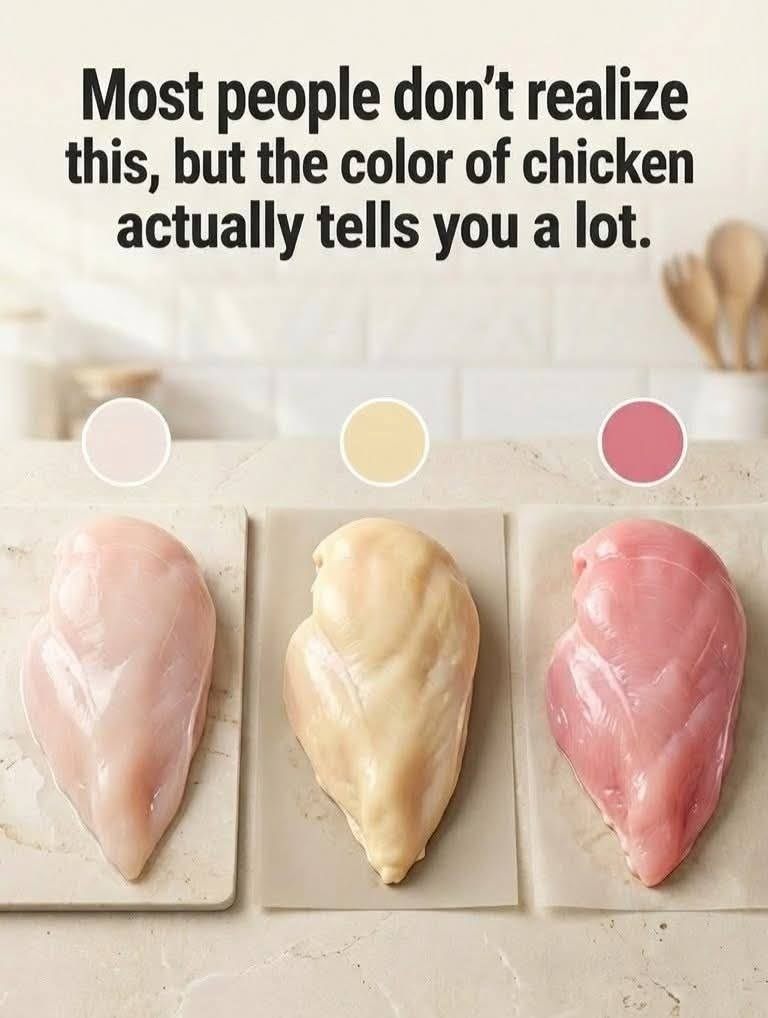
Chicken with a yellow tint is often influenced by diet, particularly feed that includes corn or other naturally pigmented ingredients. These feeds can affect the color of the skin and fat, giving the chicken a warmer, yellow appearance. Birds raised more slowly or given more space to move may also develop a firmer texture and a richer flavor, qualities some consumers prefer. However, it’s important to note that color can also be intentionally influenced, as some producers adjust feed formulas to meet consumer expectations rather than to reflect different living conditions.
For this reason, color should not be the main factor when choosing chicken. More meaningful indicators include labeling such as organic, pasture-raised, or Certified Humane, which offer insight into how the animal was raised. Freshness cues—like a clean, neutral smell, firm texture, intact packaging, and a clear expiration date—are far more important than appearance alone. There is no single “ideal” chicken color. The best choice depends on personal priorities, taste preferences, and interest in farming practices, with color being just one small detail in a much broader evaluation.
ADVERTISEMENT
