
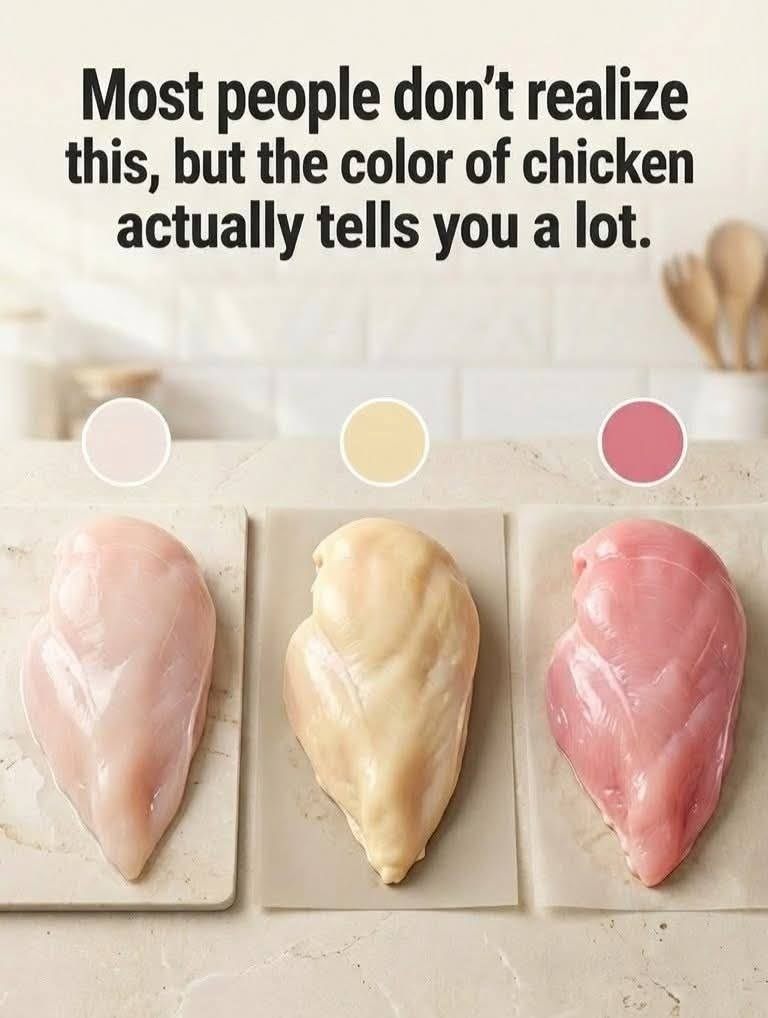
Standing in the grocery aisle, many shoppers pause when comparing packaged chicken. One package may contain meat with a pale pink hue, while another shows a deeper yellow tone. Even when the cut and price are similar, the difference in color often raises questions. It’s common to assume that darker or yellower chicken is healthier or more natural, while paler meat seems less appealing. In reality, color alone does not provide a clear or reliable measure of quality, nutrition, or safety.
In most supermarkets, lighter-colored chicken comes from large-scale commercial farming systems. These birds are typically raised indoors, bred for fast growth, and fed carefully balanced diets designed for efficiency and consistency. The result is chicken that is affordable, mild in flavor, and uniform in appearance. While pale meat is sometimes associated with lower quality, it is generally safe, nutritious, and perfectly suitable when handled and cooked properly. The lighter color reflects farming methods rather than freshness or nutritional value.
see next page
ADVERTISEMENT
